Yes. I said it.
You probably knew that would be my position.
Anyone who has delved into the various cases and arguments made on this site could probably even make the argument why the Counseling Compact is unnecessary and unconstitutional. Fo those of you who are new to the site, or you like my writing voice, I will spell it out for you.
Relevant foundation stones:
Marbury v. Madison – The Constitution is the supreme law of the land.
1st Amendment of the Constitution – “Congress shall make no law respecting an establishment of religion, or prohibiting the free exercise thereof; or abridging the freedom of speech, or of the press; or the right of the people peaceably to assemble, and to petition the Government for a redress of grievances.”
The 9th Amendment: The enumeration in the Constitution, of certain rights, shall not be construed to deny or disparage others retained by the people.
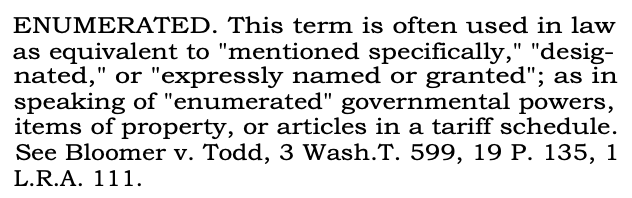
9th Amendment means two (2) things (at least):
1. That there are rights not listed in the Constitution, and the ones listed don’t negate the ones not listed.
2. that one part of the Constitution can’t be used to deny rights secured by another part of the Constitution. (e.g. using Article VI § 6 to negate the 1st Amendment, or the commerce clause negating the 1st Amendment)
Murdock v. Pennsylvania – It is unconstitutional for any government to require you to get a license and pay a fee (or tax) to enjoy any right secured under the Constitution.
Ok, let’s stop there for a minute.
What does the Counseling Compact do? It “allows” licensed counselors to serve clients in other states than the one in which they are licensed. (“Allows” is in scare-quotes because counselors are people and thus still enjoy all the rights under the constitution, regardless of licensure states, and don’t need anybody’s permission to do so under the Constitution or the various opinions of the Supreme Court of the United States.)
There are a number of problematic presumptions wrapped up in the wording of the counseling compact (link):
1. It presumes that counselors, because they are licensed, have no rights or limited rights under the Constitution,
2. it presumes that the 1st Amendment of the Constitution is only limited to the state in which a counselor is licensed, and that the counselor must have a license in order to enjoy that right
3. it asserts that a counselor must get a license in another state in order to enjoy their freedom of assembly (assembling with their clients) and/or the freedom of speech in another state.
4. It redefines freedom of speech and freedom of assembly as “privilege to practice”.
5. It requires compact counselors to pay a fee to each state in which a counselor wishes to practice. (Pay a fee to exercise your already secured rights under the Constitution).
The Counseling Compact says a licensed counselor can’t enjoy those rights secured under the Constitution without enrolling in this counseling compact and being certified.
Ok, continuing
We just saw that Marbury v. Madison says the Constitution is the supreme law of the land, that the 9th Amendment prevents one section of the Constitution from denying rights secured by another portion, or by rights that aren’t even mentioned, and we saw that the 1st Amendment protects the right to assemble and the right to free speech. Murdock v. Pennsylvania says it’s unconstitutional for any government to make you get a license and pay a fee to exercise constitutionally-secured rights. So now what?
Shuttlesworth v. City of Birmingham – if the government does pass a law making you get a license and pay a fee in order to exercise your rights under the Constitution, you can ignore it with impunity. Impunity: that means without fear of punishment.
And if they do try to punish you for it, there’s Boyd v. United States in which the Supreme Court ruled that it a crime is only committed if the person was willingly neglecting a known duty or obligation. Seeing as how anybody’s (even counselors’) right to assemble and right to free speech are already secured under the Constitution, what is the known duty or obligation a counselor is neglecting to obey by engaging in counseling across state lines without say-so by the government of wherever? The answer is there is no known duty or obligation being violated here because you have a right to do these things.
And if some foreign state (that means a state you don’t live in comes knocking, 1) you don’t have to answer any of their questions under the 4th Amendment. 2) It’s not your job to help them do their job. Also, You can challenge personal jurisdiction. Explain to me how the state government of Arizona has jurisdiction over someone in South Carolina, especially if the person from South Carolina was not in Arizona at the time, or has never even been to the state of Arizona. How does that one work out? The answer is Arizona is operating under the presumption that the offender is under their jurisdiction until that is refuted or challenged by the defendant (the South Carolina counselor being harassed by the state of Arizona). If you don’t tell them they don’t have jurisdiction, then the court will presume that they do. 3) You have to refute it outright.
Instead, Ms. Chiles stresses that she provides only talk therapy, employ-
ing no physical techniques or medications. Yet, she argues,
Colorado’s law still applies to her, prescribing what she may
say in “voluntary counseling conversations” with her cli-
ents. Id., at 50. And because that application of the law
strikes at the heart of the First Amendment’s protections
for free speech, she contends, it warrants considerably more
searching scrutiny than the rational-basis review the Tenth
Circuit applied in this case or the intermediate-scrutiny re-
view some other lower courts have employed in cases like
hers. Id., at 38; see, e.g., King, 767 F. 3d, at 237. We agree.
See that? Counseling over zoom or whatever is simply a voluntary counseling conversation according to Chiles v. Salazar.
Continuing:
Consistent with the First Amendment’s jealous protec-
tions for the individual’s right to think and speak freely,
this Court has long held that laws regulating speech based
on its subject matter or “communicative content” are “pre-
sumptively unconstitutional.”
Speech based on its subject matter. That’s the basis of the counseling compact. You can call your grandma and talk about the weather, or stand on a street corner holding a sign complaining about President Trump’s broken promises, or Barack Obama’s g*y husband. You can stand in the middle of town with a sign that says ” I hate nuggets”, anything and everything you want to say…except words of counseling. That requires a license and a fee, or so they say. That’s a content-based restriction my friend and it’s strictly unconstitutional and the court has ruled against content-based restrictions over and over and over.
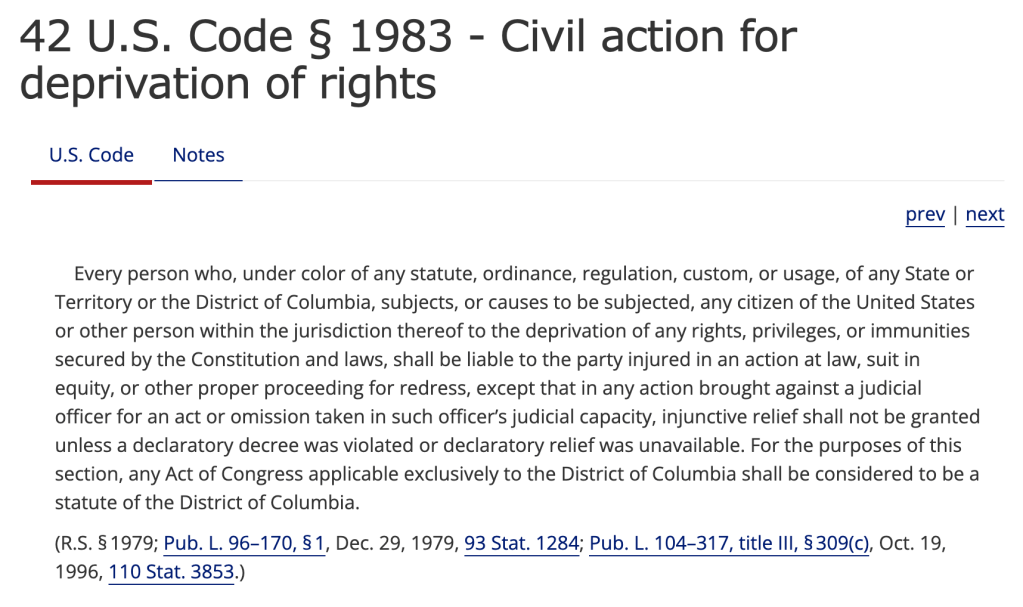
It’s time to stop suing and start using Shuttlesworth v. City of Birmingham, exercising our rights with impunity. For any government to violate these rights is called deprivation of rights under color of law. Color of law means the government or a government official is doing something pretending that what they’re doing is legal, but it’s not. In this case, violating your free speech rights like this is a violation of federal law 42 U.S. Code § 1983:
There’s extra you can do to fortify yourself against this type of nonsense. I’ll go over that in another post.
Thanks for reading.
The content presented on CounselorJam.com is for educational and informational purposes only, and is not to be construed in any way, shape, or form as legal advice.


Leave a Reply