
"Licenses Prevent The Spread of False Beliefs"
The 2018 peer-reviewed journal article in the AMA Journal of Ethics that didn't age well.
In the interest of fairness, and because we enjoy the benefit of hindsight, I want to remember that this article in question from the AMA was written in the pre-COVID era (PCE), a period where the American population as a whole still largely trusted their doctors and the medical establishment.
In 2018, the American Medical Association's Journal of Ethics, a peer-reviewed journal, published an article by Scott J. Schweikart called Constitutional Regulation of Speech (False Beliefs) In Health Care. [link]. Since the focus of the CounselorJam website is the rights of mental health professionals, that will be the lens through which the article is addressed.
From the Journal:
In the context of health care, consider the situation of a clinician practicing with a false belief—such as the belief that vaccines cause autism—who counsels patients against receiving vaccines. This belief is counter to established evidence-based medicine and causes appreciable harm. For this reason, some legal scholars note that true and false speech regarding scientific facts—such as what might be exchanged during a clinical encounter, for example—should be separate First Amendment speech categories, thereby allowing greater regulation of false scientific speech. Scientific speech is different from other kinds of false speech because of the nature of evidence-based logic; that is, it is easier to determine which statements are actually true or false. As Christopher Guzelian explains, “false scientific speech meets the predictable definition of false speech better than other forms of speech because the speech’s falsity is knowable.”
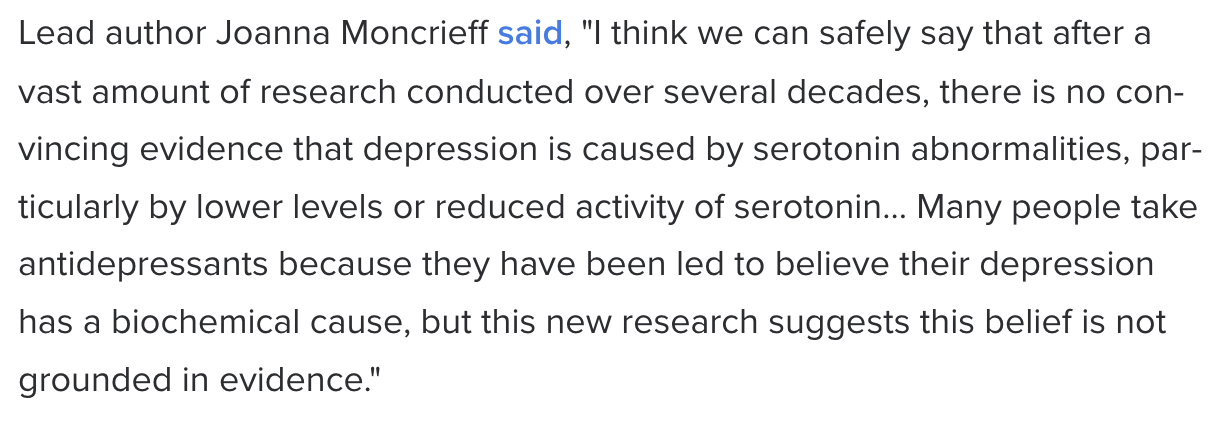
A number of recent developments in "science" have occurred that completely destroy that which was "known". Our first example: "depression is caused by a chemical imbalance".
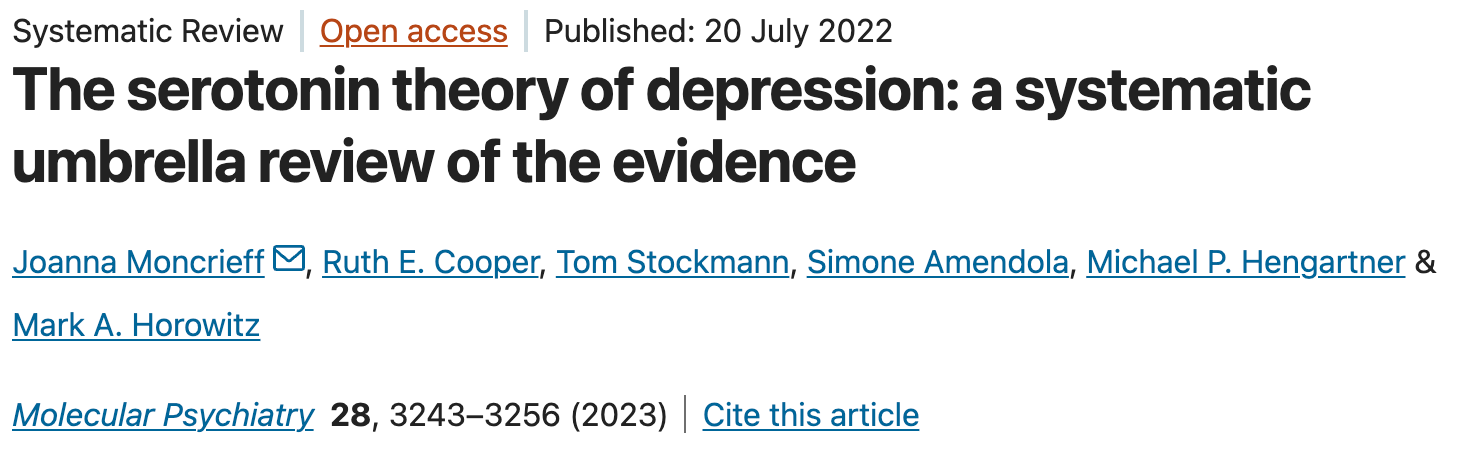
Revealed no evidence of association with depression, or of an interaction between genotype, stress and depression.
What other recent discoveries have occurred?
A new study found that a popular Chemotherapy causes cancer. Yes, that chemotherapy. The chemotherapy they've used with and without surgery in order to fight cancer. Turns out it activates dormant cancer cells and makes the cancer worse.
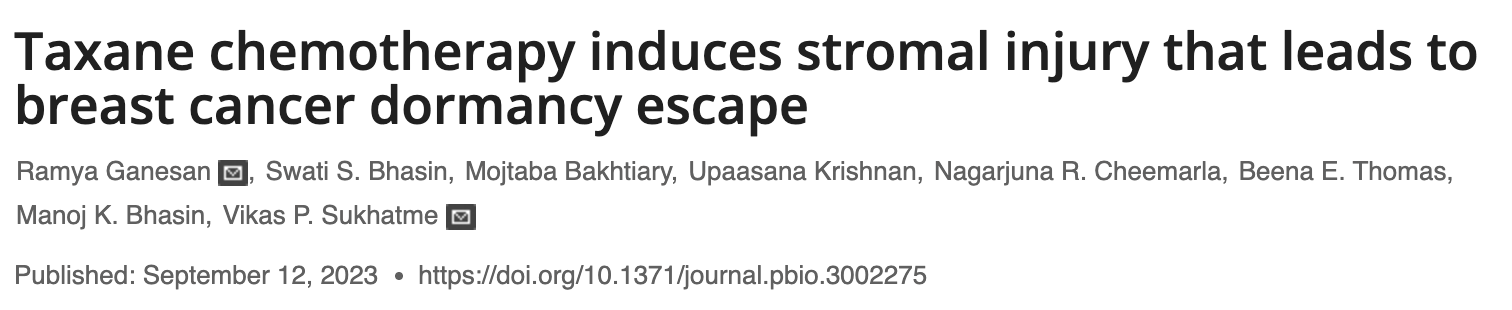
"Even when those tumors had not directly received radiation therapy."
Things we knew to be true...until they weren't.
The "depression is caused by a chemical imbalance" myth has been treated as gospel since the 1990s, when Prozac was released. Chemotherapy has been the industry standard for treating breast cancer and other cancers.
Fast-forward to the COVID era.
We were told the mRNA COVID vaccines were "safe and effective", and just this summer the FDA approved a required warning about the risk of myocarditis and pericarditis after receiving any of a number of the vaccines.
In case you're worried this is a political move, the president whose administration ran the FDA that told us the mRNA shots were "safe and effective" is the same president whose administration oversees the current FDA that approved the required warning. It's not a reversal of a previous and opposing administration's policies.
All of the cases presented here are ones where that which was scientifically "known" has been discovered to be at least questionable, and at worst a complete fabrication, and all of the aforementioned cases benefitted the pharmaceutical industry. But this article is as much about the pharmaceutical industry as it isn't.
Doctors who called into question the safety and efficacy of mRNA technology as the basis for vaccines were threatened with loss of their licenses, because the government mandated a particular narrative and claimed that the science was settled. Many doctors who questioned the narrative put forth by the government and the medical establishment were censored or made to self-censor, past published works and journal articles of unrelated content were struck from the record, many doctors threatened with sanctions, some were sued, and many were threatened with losing their professional licenses.
This is not good policy for what should be obvious reasons, but don't take my word for it. The U.S. Supreme Court has already made clear their position on this issue, but we'll get to that in a minute.
Mr. Schweikart uses two cases to support his notion that professional speech is not protected, and makes the same dubious error of blurring the lines between "speech" and "conduct". The first case is Pickup v. Brown which was a Ninth Circuit Court of Appeals case that ruled that a ban on SOCE (Sexual Orientation Change Efforts) was a Constitutional restriction on "professional conduct". The second case, King v. Governor of New Jersey, was a 3rd Circuit Court of Appeals case where the court ruled that a ban on SOCE was a valid restriction on professional speech.
The courts of appeals argued that the bans were Constitutional:
in its attempt to protect its citizens from harmful and ineffective professional practices, has “drawn reasonable inferences based on substantial evidence.
Schweikart states:
the Court upheld the ban as a constitutional restriction on the professional’s conduct and did not view the ban as a limit on professional speech.
The timing of the publication, and Constitutionally sound principles of Mr. Schweikart's article, couldn't have been worse. The legal arguments of the cases he cited were shot down by the Supreme Court, some even before the ink was dry on the page. Schweikart's article was published in November 2018, but the supreme Court rendered the opinion for Nifla v. Becerra, which shot down the legal arguments for Pickup and King just five months earlier, an opinion which Schweikart didn't include in his article. It's possible that he didn't know about the case at the time of his writing, or he wrote his article before the opinion was rendered.
Schweikart also cites Planned Parenthood of Southeastern Pennsylvania v Casey in discussing compelled speech. In 2022, the U.S. Supreme Court overturned Roe v. Wade and also overturned the key judgement in Casey. Not a good track record for Schweikart.
Pickup v. Brown and King v. Governor of New Jersey were both addressed by the U.S. Supreme Court, as was the notion of "professional speech", in a case commonly called Nifla v. Becerra:
National Institute of Family and Life Advocates v. Becerra, 585 U.S. ___ (2018)
Justice Thomas setting up the cases of Pickup and King:
Some Courts of Appeals have recognized “professional speech” as a separate category of speech that is subject to different rules. See, e.g., King v. Governors of New Jersey, 767 F. 3d 216, 232 (CA3 2014); Pickup v. Brown, 740 F. 3d 1208, 1227–1229 (CA9 2014); Moore- King v. County of Chesterfield, 708 F. 3d 560, 568–570 (CA4 2014). These courts define “professionals” as individuals who provide personalized services to clients and who are subject to “a generally applicable licensing and regulatory regime.” 232; Pickup, supra, at 1230. “Professional speech” is then defined as any speech by these individuals that is based on “[their] expert knowledge and judgment,” King, supra, at 232, or that is “within the confines of [the] professional relationship,” Pickup, supra, at 1228. So defined, these courts except professional speech from the rule that content- based regulations of speech are subject to strict scru- tiny. See King, supra, at 232; Pickup, supra, at 1053– 1056; Moore-King, supra, at 569.
Justice Thomas continues by addressing specifically the notion of "professional speech":
But this Court has not recognized “professional speech” as a separate category of speech. Speech is not unprotected merely because it is uttered by “professionals.” This Court has “been reluctant to mark off new categories of speech for diminished constitutional protection.” And it has been especially reluctant to “exemp[t] a category of speech from the normal prohibition on content-based restrictions.”
Justice Thomas lays out two exceptions "neither of which turned on the fact that professionals were speaking:"
First, our precedents have applied more deferential review to some laws that require professionals to disclose factual, noncontroversial information in their “commercial speech.” Second, under our precedents, States may regulate professional conduct, even though that conduct incidentally involves speech. But neither line of precedents is implicated here.
Pickup and King were not plaintiffs in Nifla v. Becerra, but it seems as though Justice Thomas inflicted damage on the Ninth Circuit Court of Appeals' arguments, and telegraphed arguments for both Pickup and King to return to court to fight another day.
But now we get to the real red meat that is relevant to the Mr. Schweikart's point.
Justice Thomas continues:
The dangers associated with content-based regulations of speech are also present in the context of professional speech. As with other kinds of speech, regulating the content of professionals’ speech “pose[s] the inherent risk that the Government seeks not to advance a legitimate regulatory goal, but to suppress unpopular ideas or information.” Turner Broadcasting, 512 U. S., at 641. Take medicine, for example. “Doctors help patients make deeply personal decisions, and their candor is crucial.” Woll- schlaeger v. Governor of Florida, 848 F. 3d 1293, 1328 (CA11 2017) (en banc) (W. Pryor, J. concurring). Throughout history, governments have “manipulat[ed] the content of doctor-patient discourse” to increase state power and suppress minorities:
Justice Thomas then lists a number of instances in the 20th century when governments content-based restrictions in such a way to control the population.
Further, when the government polices the content of professional speech, it can fail to “‘preserve an uninhibited marketplace of ideas in which truth will ultimately prevail.’
Sounds also a bit like what we experienced during the COVID pandemic, doesn't it? The medical establishment and regulatory bodies imposed such draconian content-based regulations against any medical professionals who chose to use procedures and treatments different than what was ordered by said medical establishment, and even more so against anyone who dared to say that their alternative treatment was effective in helping people prevent, mitigate, and/or recover from COVID infections.
Schweikart:
While the risk of stifled truth always exists, reducing that risk is a joint responsibility of the medical profession and the government.
That line is cringeworthy in a post-COVID era. One more from him.
When considering restrictions on scientific speech (like medical speech), larger questions come into view: Is false scientific speech always harmful? Might there be some false scientific speech that is not harmful? The answer is that false scientific speech of professionals is always harmful.
What was ruled "false scientific speech" during the early COVID era saved many lives. The "evidence-based logic" Schweikart claimed early in his article seemed to be in short supply in November 2018, and his arguments don't hold water.
Think of how much of the "known science" about COVID and COVID treatments have been revised or disproven in the last 2-3 years? How many more known facts will be reversed and disproven in the coming years? It seems even the "fact" that autism is not caused by vaccines may only last a while longer before that too crumbles under scrutiny like so many other "truths" that ended up being as false as the recently redacted 25 year old study claiming that glyphosate it safe.
Experience of the last 5 years tells us that Justice Thomas was right: not only does restriction of speech enable the government to stifle criticism and violate ethical standards or even commit crimes against various populations, but also stifles creative thought and new breakthroughs.
